
Connect Cisco and third-party infrastructure data with vulnerability, exposure, threat-intelligence, and service context instead of relying on Common Vulnerability Scoring System (CVSS) scores alone. Weigh whether an asset is reachable, how critical it is to the business, and whether there is evidence of active exploitation, such as a listing in the CISA Known Exploited Vulnerabilities (KEV) catalog. This helps focus remediation on the most significant risks.
Speed decides who wins
Agentic AI accelerates how attackers find and exploit known flaws in your infrastructure.

Frontier models accelerate vulnerability discovery
Agentic tools can now analyze code, test hypotheses, and find vulnerabilities that once required scarce security expertise.

New threats require different responses
Detection, patching, and response still matter, but they're no longer enough when agents can move faster than many teams can inventory, prioritize, and remediate risk.

Aging infrastructure is the target
End-of-support gear, open management paths, and telemetry blind spots expose control planes before defenders can patch, leaving organizations with limited options to respond.
Four metrics that make exposure governable
Once exposure is confirmed, how quickly can you turn it into a controlled response?
Time to visibility
How fast can you determine what is vulnerable, reachable, owned, and material?
Time to protection
How fast can you reduce reachability or apply a validated protective control?
Time to containment
How fast can you pre-position controls that limit the potential blast radius?
Time to remediation
How fast can we deliver a durable fix, with the right approvals in place?
Close the exposure window
Insights Suite for Splunk and Cisco Cloud Control work as one to defend against AI-era threats.
1
See every asset and path
Cisco gear streams the telemetry. Splunk correlates it with non-Cisco data, unfiltered.
2
Fix what matters most
Splunk Exposure Analytics ranks risk by impact. Cisco trust evidence flags gear without a trust anchor.
3
Protect before the patch
Cisco Live Protect shields supported gear. Cisco Identity Services Engine (ISE) and Security Group Tags contain the rest.
4
Validate every access path
Splunk correlates ISE, Duo, and network telemetry to spot anomalous users and verify access.
5
Govern and enforce
Splunk Agentic SOC recommends governed actions. Cisco Extended Detection and Response (XDR) and ISE enforce them across the network.

Explore exposed infrastructure resources

Get one secure, unified view
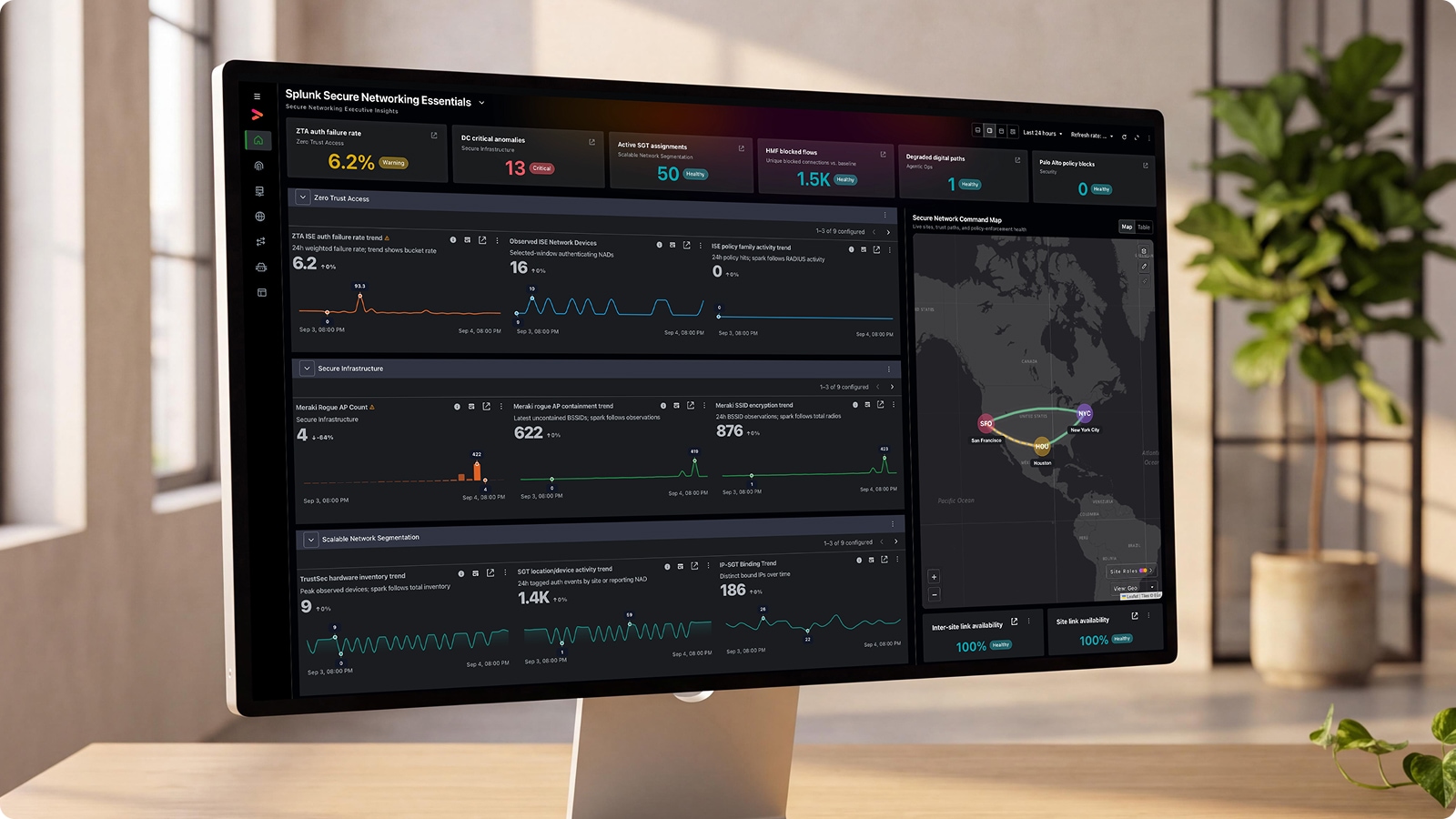
Splunk Secure Networking Essentials brings executive, IT operations, and network security dashboards into one view.

Turn noise into business insights
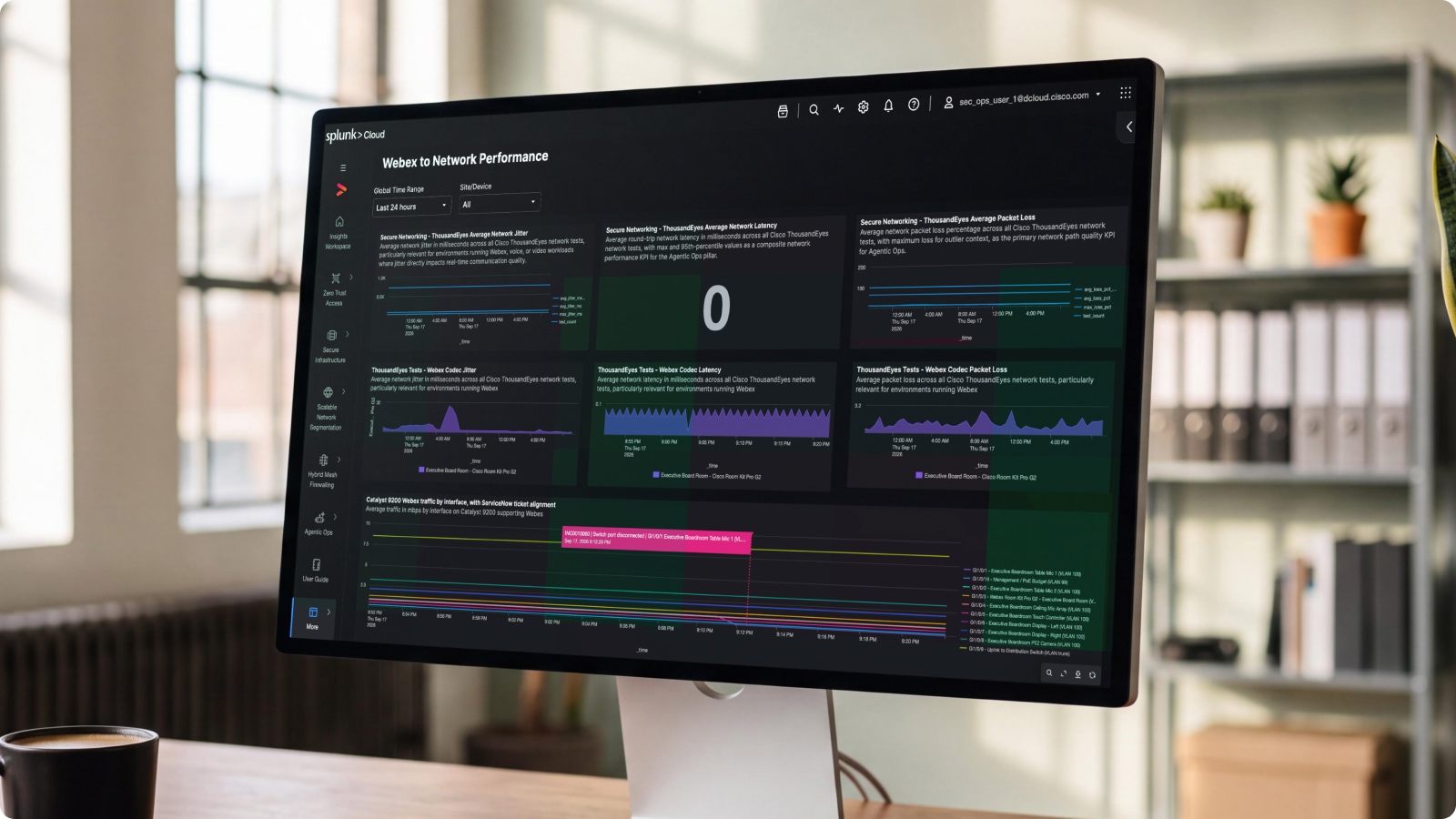
Splunk ITSI ties Cisco telemetry to payment stalls, exposing known CVEs, a low-rate attack, and an open admin path.

Find and prioritize infrastructure vulnerabilities
Splunk Agentic SOC ranks infrastructure exposures by risk and moves triage, investigation, and response through one workflow.

Shift to continuous defense
AI-era threats demand a new operating model. Plan for risk continuously, not one incident at a time.
Frequently asked questions about exposed infrastructure
When you can't patch right away, apply compensating controls such as segmentation and firewall containment, and use Splunk to coordinate a risk-based response. For supported Cisco platforms and vulnerabilities, Cisco Live Protect runtime protections can help reduce exposure until you apply the patch and may lessen the need for unplanned downtime.
Narrow the exposure window by bringing Cisco network telemetry into Splunk for continuous behavioral monitoring that helps surface anomalies sooner. Connect these analytics with automated response to help contain threats and limit their spread. For example, Splunk Security Orchestration, Automation, and Response (SOAR) playbooks can quarantine affected devices through Cisco ISE. Isolate the management plane with access controls, out-of-band management, and removal of stale access paths. Use the same data to plan the replacement of end-of-support hardware.
Bring telemetry from networking, security, and cloud domains into a centralized platform like Splunk to reduce the data silos that can hide multistage attacks. With broader visibility, security teams can correlate seemingly unrelated events across infrastructure layers. This helps them detect advanced threats earlier and respond with more context.
Advancing zero trust means using identity, device posture, and segmentation controls to set access boundaries and reduce the blast radius of a breach. Tools such as Cisco ISE, Duo, or Secure Access provide those controls. Splunk adds analytical context that helps teams identify risky access paths and support continuous verification based on least privilege.
Splunk ITSI is an AIOps and service intelligence solution for IT operations teams. It brings together data from applications, infrastructure, networks, and existing monitoring tools to help teams monitor service health, reduce alert noise, find likely root cause faster, and understand business impact in real time.
Cisco Live Protect is designed to help narrow the exposure gap between the disclosure of a vulnerability and the application of a permanent software patch. For supported platforms and vulnerabilities, it provides Cisco-validated runtime protections called Vulnerability Shields. These protections can mitigate risk without an immediate software upgrade or reboot. They are interim measures and don't replace patching.
Cisco Cloud Control is a unified operations platform designed for AgenticOps. It is intended to bring together Cisco domains, such as networking, security, and observability, along with connected third-party systems, in a single operational environment. It aims to reduce complexity with a consistent user experience and a single front door to the Cisco estate, without replacing individual product dashboards.

This page includes imagery created with the assistance of AI.